Crimson Desert
Puzzle Guide
& Solutions
Explore, solve, and master every puzzle in Crimson Desert — from ancient mechanisms to hidden strongboxes.
What Are Crimson Desert Puzzles?
Crimson Desert puzzles are an essential part of the game’s open-world experience. Unlike traditional RPG puzzles, they are deeply integrated into exploration, combat progression, and environmental storytelling.
In Crimson Desert, puzzles are not just optional challenges—they often unlock new abilities, hidden areas, fast travel points, and valuable rewards. Many players consider puzzle-solving one of the most rewarding aspects of the game.
How Do Puzzles Work?
Environment-Based Clues
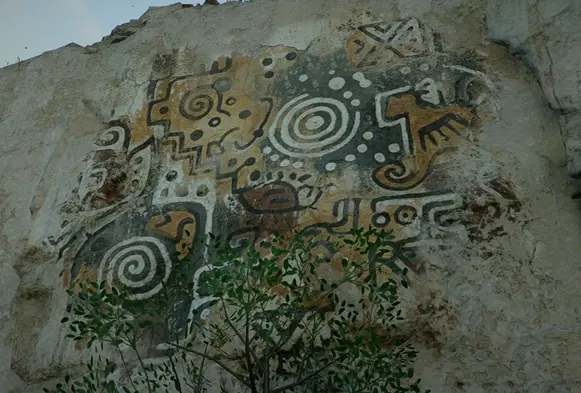
Most puzzles rely on your ability to observe symbols carved into walls, statues, lighting, and sound. Interpret the world itself as the main source of clues.
Ability-Driven Interaction
Many puzzles require special abilities like moving objects, activating ancient devices, or manipulating physics elements. These are interactive challenges.
Exploration & Discovery
Puzzles are rarely marked on the map. Discover them naturally, connect clues across locations, and experiment with different solutions.
Types of Crimson Desert Puzzles
Strongbox Puzzles
Locked containers requiring sound pattern recreation or symbol matching. Tests memory and attention.
Mechanism Puzzles
Rotating structures and aligning symbols to activate ancient machines. Focuses on logic.
Treasure Map Puzzles
Follow clues from maps or notes to explore large areas. Emphasizes exploration and navigation.
Physics-Based Puzzles
Using abilities to move objects and build paths. Interactive and creativity-driven challenges.
World Interaction
Activating towers, ringing bells, or restoring structures. Often tied to world progression and fast travel.
Why Are Crimson Desert Puzzles So Difficult?
Unlike most modern games, Crimson Desert does not hold the player’s hand. Many players find puzzles challenging due to minimal guidance, complex symbols, and non-linear design. Solutions are often spread across multiple locations, making puzzle-solving both frustrating and rewarding.
Essential Tips
- Carefully observe your surroundings
- Look for repeating symbols or patterns
- Use abilities freely to test ideas
- Take notes or mark locations
- Leave and return if stuck
Featured Guides
Expert walkthroughs for the most complex challenges in Pywel.

Crimson Desert - Complete Ancient Ruins Puzzle Guide
A full walkthrough for every currently documented Ancient Ruins puzzle in Crimson Desert, with region routes, exact puzzle logic, and fail-safe recovery tips.

Crimson Desert – Dragon’s Stone Chamber Puzzle
Find the Crimson Desert stone puzzle in Dragon’s Stone Chamber, learn the exact location and disc solution, and unlock Abyss‑tier rewards early in the game.

Crimson Desert — Duskwood Hill Ruins Puzzle
Crimson Desert Duskwood Hill Ruins Puzzle guide with location, steps to align the pillars, and quick tips to unlock the Abyss reward and finish this ancient ruin.